
Keynotes

Keynote Speakers

Discover our keynote programme: speaker bios, talk titles, and abstracts.

Katja Hofmann
Katja Hofmann
Partner Research Manager, Microsoft Research Cambridge
Co-leads People-Centric AI
Keynote title
Generative AI for Connection and Creativity

Bio

Katja Hofmann is a Partner Research Manager at Microsoft Research Cambridge, where she co-leads the People-Centric AI research area. Her work focuses on generative AI, interactive media, and game intelligence, combining advances in machine learning with human-computer interaction, design, and social science.

With her team she aims to create AI systems that empower people through collaboration, creativity, and play – unlocking new forms of interaction and addressing complex real-world challenges.

Read abstract
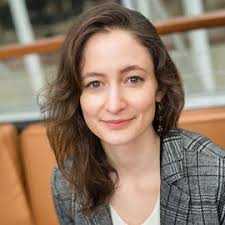
In the rapidly evolving landscape of AI models and tooling innovation, a central question guides our work: How do we build technologies that genuinely support people in pursuing what matters to them? This keynote reflects on recent research from the People-Centric AI area at Microsoft Research Cambridge, highlighting progress toward AI systems that understand human context, foster equitable access and representation, and act as generative "connective tissue" for collaboration and creativity. Through examples spanning world-model research, inclusive data practices, and emerging tools that help people express ideas, explore possibilities, and work together more effectively, the talk outlines best practices for developing AI that amplifies human potential and strengthens the connections between us.
Madeleine I. G. Daepp
Madeleine I. G. Daepp (IR4good keynote)
Visiting Director of Civic Innovation, Public Democracy America
Senior researcher, Microsoft Research
Keynote title
Gemini Hegemony

Bio

Dr. Madeleine I. G. Daepp is Visiting Director of Civic Innovation at Public Democracy America, where she advises nonprofits on navigating the AI transition, and senior researcher at Microsoft Research studying the impacts of generative AI on global democracies. A civic technologist with a Ph.D. from MIT, her work centers on collaborating with communities and leveraging novel technologies to solve problems in shared public spaces. Dr. Daepp has written invited perspectives on the societal impacts of AI for The Economist and Nature Computational Science (forthcoming) and published in peer-reviewed venues across computer science, public health, and urban planning.

Read abstract

For some people AI is a megaphone. But many people around the world are experiencing its harms, from cultural erasure to expanding scam and influence operations to scaled surveillance states. In this keynote, I draw on fieldwork conducted in Taiwan and India during the 2024 mega-election year to characterize key emerging challenges that generative AI poses for democracies around the world. Based on interviews with more than 70 frontlines actors in both defender and creator roles, I identify a set of recurring challenges as generative AI systems are deployed at scale. I then show how these findings shaped my work to expand red-teaming efforts across languages and cultures, and map the challenges I observed to key insights and opportunities in IR research. We are in a critical moment to avoid repeating social media's missteps, and the choices made by builders – from development to interaction design – will be key in ensuring a democratic future with AI.
Tetsuya Sakai
Keith van Rijsbergen Award
Tetsuya Sakai
Professor, Department of Computer Science and Engineering, Waseda University
Dean, Center for Data Science, Waseda University
Keynote title
Did You Know? Evelen Nerdy Trivia about Evaluation Measures

Award citation

For pioneering contributions to the evaluation of information retrieval systems and lasting impact on experimental methodology in the field.

Bio

Prof. Sakai is internationally recognised for his work on evaluation metrics, test collections, and experimental methodologies. His research has shaped how information retrieval systems are assessed and compared, contributing to more robust and reproducible research practices across the discipline.

About the Keith van Rijsbergen Award
The Keith van Rijsbergen Award is presented at ECIR in honour of Professor Keith van Rijsbergen, a pioneer in modern information retrieval and a strong advocate of the development of models and theories in information retrieval. It recognises researchers who have made significant contributions in using theory to develop new IR models, paradigms, concepts, or metrics – addressing foundational aspects of the field and opening up new ways of thinking about information retrieval. 
The Keith van Rijsbergen Award is sponsored by The University of Glasgow School of Computing Science and BCS IRSG.
1945 hits